

Masking and plugs in Coatings/Finishes: Rarely do jobs or projects come around where 100% of the part gets coated. Typically there are areas will need to be free of paint and free of sandblasting (prepped surfaces). There are a few ways that you can mask a part, prior to sandblasting, and paint application.
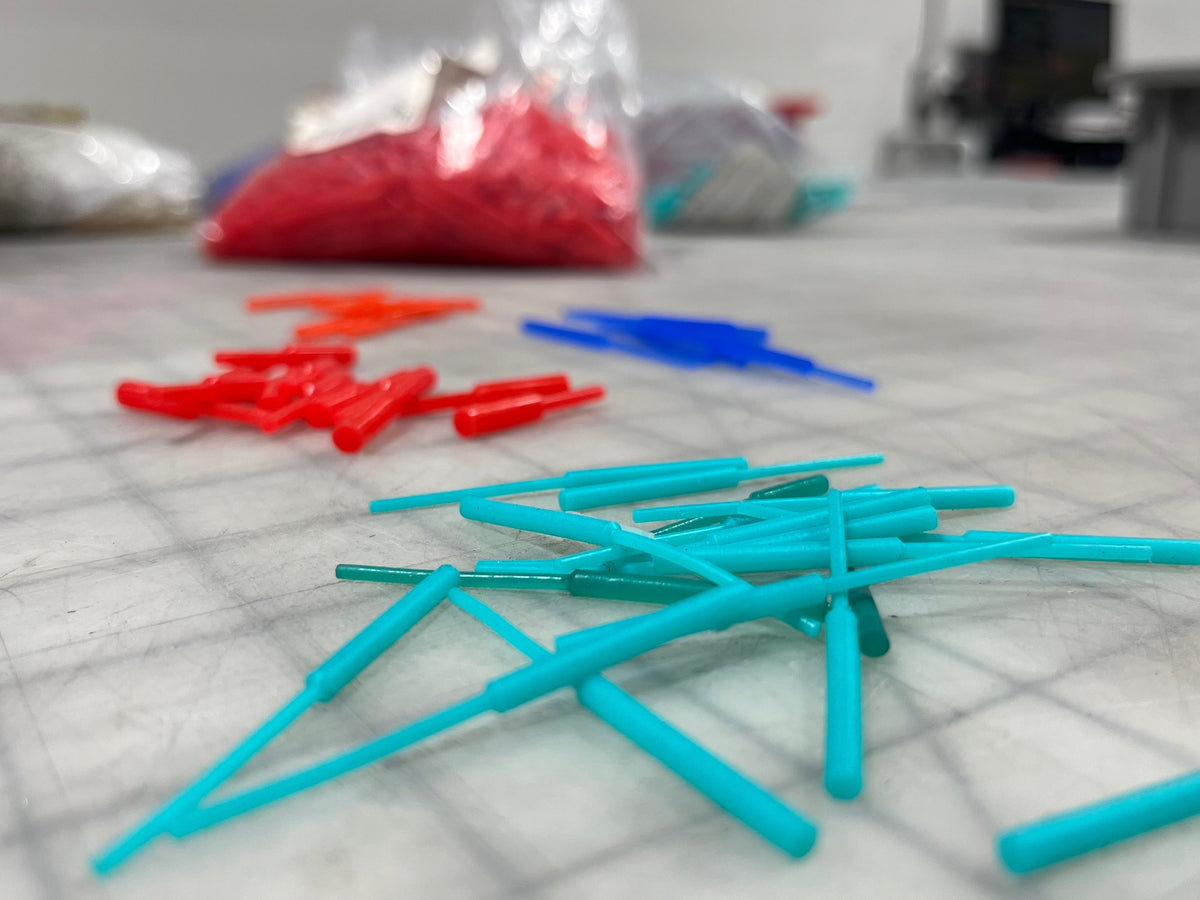
Commonly, various tapes will be used in masking, whether they be paper-based or vinyl-based. Tape can be used for masking, along with rubber or silicone plugs for threaded surfaces. There is a wide variety of different sizes and profiles for masking plugs, which can be used in threaded holes on threaded rod material.
 Different tapes can be used for flat and convex and concave surfaces. Plotters (“vynil-cutters”) are often used to cut vinyl for specific shapes of parts that get masked.
If you were to start a project that needs to get blasted, and surface prepped prior to paint, but critical surfaces need to be protected, this is where masking is essential.
Important Masking Process Considerations:
Clean parts prior to any masking.
A lot of high temp masking has very weak adhesion properties and will not adhere to soiled parts consistently. Contaminates inside of holes that get plugged and off gassing in an oven curing environment can cause issues in the final finish.
Working with a cleaned part, mask the critical areas such as thread areas, or areas not to be blasted or prepped. Make sure the masking is proper for the application to reduce the chances of FOD which is “foreign object debris” (Learn about FOD here.)
Masking Pitfalls to Avoid:
Plugs CAN be reused, but it's often best to clean the plugs regularly, prior to reuse. You don't want old, residual paint left on silicone, plastic or rubber plugs. Paint could flake off during the process and cause issues down the road on a finished part.
Masking tape should never be reused. Masking tape is a “one and done” material. Typically it will retain dried paint. For certain masking applications, paper type masking can be used, but you have to be very careful with wet coating applications, as they can get saturated and cause bleed through onto the part.
It’s not ideal to clean and reuse plugs when masking. The best practice is to use brand new plugs, because it lessens your chance of FOD. It reduces potential reject problems, as you can also have reactions from a contaminated plug used on a new surface. Contamination can cause issues around that area that's masked, so try to avoid reusing plugs.
 Masking plugs in various sizes and shapes.
The removal of plugs and tape can be very critical especially when dealing with FOD, as paint can stick to the masking, whether vinyl tape, paper tape, or silicone plugs. Always use care when removing any type of masking materials.
A consistent, clean masking process is one of many steps to premium paint finishes.
Share: